
What You’ll Learn
- What makes a gig app ‘beginner-friendly’
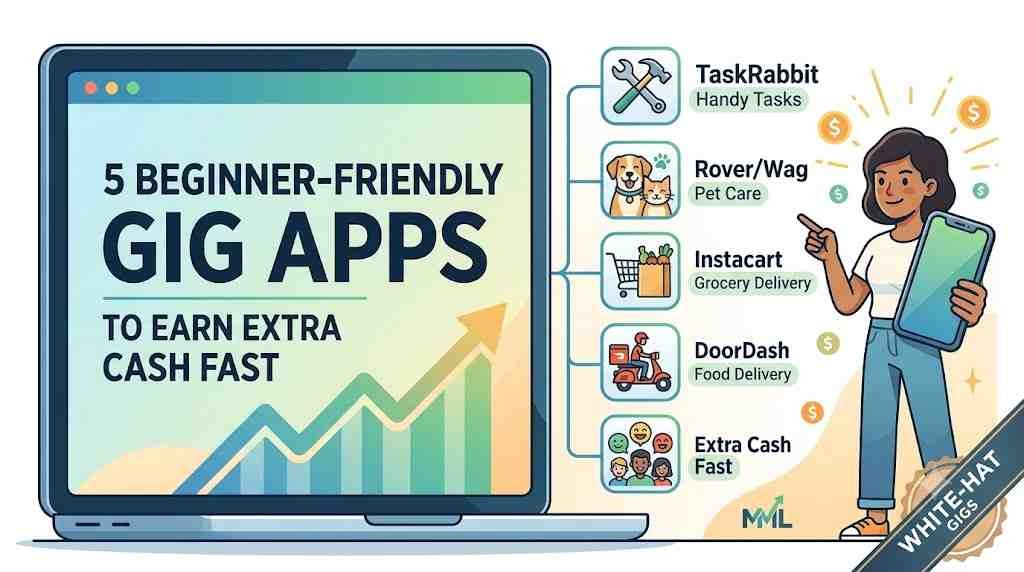
- 5 gig apps worth considering
- Realistic pay expectations
- What to know before you sign up
- Tax basics for gig income
Gig apps remain one of the fastest ways to earn extra cash without upfront investment, but pay and flexibility vary a lot between platforms. This list focuses on apps with low barriers to entry and straightforward onboarding for someone starting from zero.
5 Gig Apps Worth Considering
- TaskRabbit — furniture assembly, moving help, and small home tasks; good if you have some general handiness and want flexible, higher-per-task pay.
- Rover — pet sitting and dog walking; strong option if you like animals and want a flexible, low-pressure gig with repeat local clients.
- Instacart — grocery shopping and delivery; consistent demand, straightforward onboarding, pay is per batch plus tips.
- DoorDash — food delivery; very low barrier to entry, flexible hours, though per-delivery pay has become more competitive as more drivers join.
- Wag — an alternative pet-care platform to Rover, useful to compare demand and rates in your specific area.
Realistic Pay Expectations
Pay varies heavily by city, time of day, and demand. TaskRabbit and Rover tend to offer higher per-task earnings but lower overall volume; DoorDash and Instacart offer more consistent gig availability but with thinner margins per task once gas, vehicle wear, and time are factored in. Treat early weeks as a period to learn your local market’s actual rates before judging whether a platform is worth your time.
What to Know Before You Sign Up
- Most platforms require a background check, which can take a few days to clear before you can start accepting jobs.
- You’re generally classified as an independent contractor, not an employee — this affects taxes, benefits, and how disputes are handled.
- Vehicle-based gigs (DoorDash, Instacart) have real wear-and-tear and insurance considerations that eat into apparent hourly pay if not accounted for.
Tax Basics for Gig Income
Gig income is self-employment income for tax purposes, subject to income tax and self-employment tax. Platforms typically issue a 1099-NEC or 1099-K once you cross reporting thresholds, but the income is taxable regardless of whether you receive a form. Many gig workers set aside 25–30% of earnings for taxes and consider quarterly estimated payments to avoid a penalty at filing time — a CPA can help tailor this to your specific situation.
Frequently Asked Questions
Which gig app pays the most for beginners?
It depends heavily on your city and availability, but TaskRabbit and Rover often have higher per-task pay than delivery apps, while DoorDash and Instacart offer more consistent, lower-barrier availability.
Do I need a car to start gig work?
Not necessarily — TaskRabbit and Rover can be done without a vehicle in many cases, while DoorDash and Instacart typically require one (or in some cities, a bike).
How much should I set aside for taxes on gig income?
A common rule of thumb is 25–30% of gig earnings, though your actual rate depends on total income and deductions — consult a CPA for a precise figure.
Want to turn gig income into something more scalable?
Our Freelancing guide covers how to move from hourly gig work into higher-value client work over time.