What You’ll Learn
- Why ‘winning product’ hunting fails most beginners
- Where to actually look for product ideas
- A validation checklist before you spend on ads
- Signs a product is worth testing further
- Signs a product isn’t worth pursuing
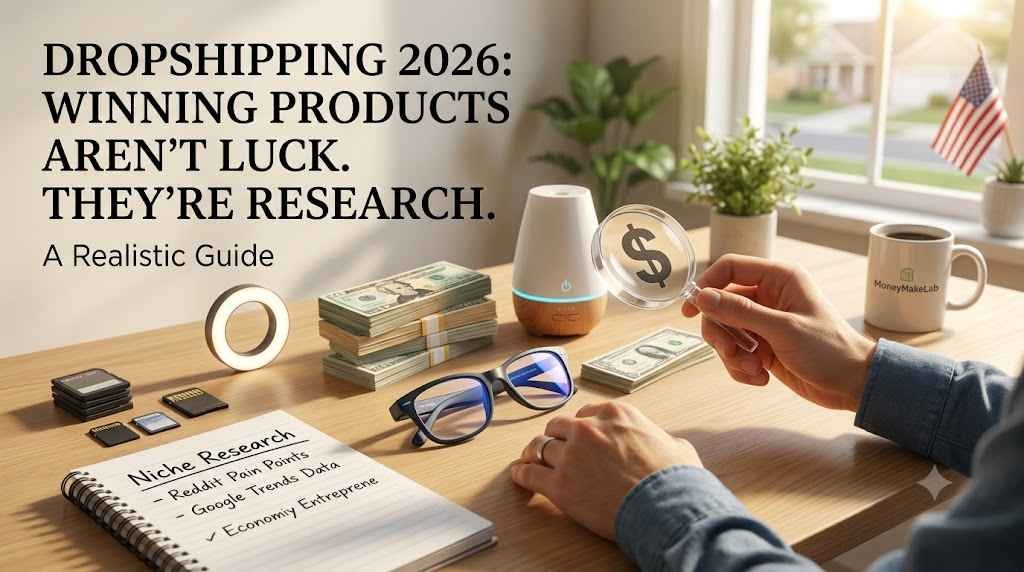
Most ‘winning product’ content oversimplifies dropshipping into a treasure hunt. In practice, finding a viable product is a research and validation process, not a lucky discovery — and skipping validation is the single biggest reason beginner product tests lose money.
Why ‘Winning Product’ Hunting Fails Most Beginners
Chasing whatever looks viral on TikTok Shop or a competitor’s store usually means you’re already late — the product is saturated, ad costs for it have risen, and you have no differentiation. A more durable approach is finding products with a genuine, specific problem-solution fit for an audience you understand, even if it’s less ‘exciting.’
Where to Actually Look for Product Ideas
- Meta Ad Library — search competitor or niche keywords to see which ads have been running consistently for weeks or months, a signal of sustained profitability rather than a short-lived spike.
- Google Trends — check whether interest in a product category is rising, seasonal, or declining before committing inventory or ad budget to it.
- Amazon ‘Movers & Shakers’ and review sections — reveal genuine customer pain points and feature requests that can inform a better product angle.
- Niche-specific Reddit and Facebook communities — often surface real complaints about existing products, which is where differentiated product angles come from.
A Validation Checklist Before You Spend on Ads
- Does the product solve a specific, describable problem rather than being a generic novelty?
- Is the price point sustainable after product cost, shipping, ad spend, and platform fees — not just profitable on paper?
- Can you source it from a US-based or fast-shipping warehouse to meet current customer delivery expectations?
- Have you ordered a sample yourself to verify real quality before promoting it to customers?
Signs a Product Is Worth Testing Further
- Competitor ads for similar products have been running for an extended period without major creative changes (a sign of sustained, not short-lived, performance).
- Genuine, specific customer complaints exist about current market options that your product or angle addresses.
- The product has visual or demonstrable appeal that works well in short-form video ad creative.
Signs a Product Isn’t Worth Pursuing
- It’s already flooded across dozens of nearly identical dropshipping stores with no differentiation possible.
- Shipping time from your supplier exceeds 2 weeks, which conflicts with current US buyer expectations and increases chargeback risk.
- Margins only work at unrealistically high conversion rates that first-time stores rarely achieve.
Frequently Asked Questions
Is it too late to find a good dropshipping product in 2026?
No, but the bar has risen — durable products now typically need a genuine differentiation angle (niche targeting, bundling, better presentation) rather than simply reselling a generic trending item.
How long should I test a product before giving up on it?
Most experienced sellers evaluate an initial small ad test (a few hundred dollars) over roughly 3–7 days before deciding whether to scale, adjust, or abandon it — testing longer without positive signals rarely changes the outcome.
Do I need special tools to find winning products?
Free tools (Meta Ad Library, Google Trends, marketplace review sections) cover most of what’s needed at the beginner stage; paid product research tools become more useful once you’re testing at higher volume.
Still deciding if dropshipping fits your situation?
Read our full ‘Is Dropshipping Still Worth It’ guide for a realistic cost and margin breakdown before you commit budget.