
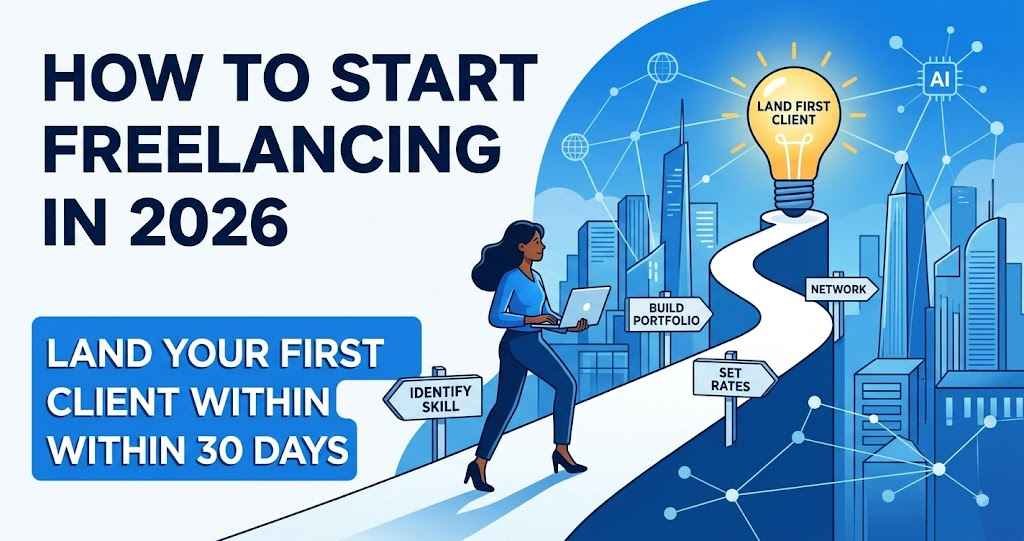
Freelancing is no longer a fullback plan. In 2026, it is a deliberate career choice made by millions of professionals who want flexibility, income control, and the freedom to work from anywhere. But getting started is where most people get stuck — not because the path is complicated, but because nobody gives them a clear, honest starting point. This guide does exactly that.
What Is Freelancing and Why It Works in 2026
Freelancing means selling your skills to clients on a project or contract basis — without being permanently employed by any single company. You set your rates, choose your clients, and decide when and where you work.
The demand for freelance talent has never been stronger. Companies of all sizes are shifting away from full-time hires for specialised tasks, preferring to bring in skilled freelancers on demand. This creates a massive, ongoing opportunity for anyone willing to package their skills professionally.
KEY INSIGHT
The most in-demand freelance skills in 2026 include AI prompt engineering, video editing, copywriting, web development, graphic design, SEO, and social media management. You do not need all of them — you need to be excellent at one.
Step 1 — Identify Your Freelance Skill
Start with what you already know. You do not need to learn something new to begin freelancing. Audit your current skills honestly: what do people ask you for help with? What tasks do you complete faster or better than your peers? What would someone pay to have done for them?
If you genuinely have no marketable skill yet, the fastest ones to learn for paid work include copywriting (3–4 months of focused practice), basic web design with no-code tools like Webflow (2–3 months), and social media content creation (4–6 weeks to learn the fundamentals).
Suggested: Diagram, chart, or illustration supporting the section above.
Step 2 — Build a Simple Portfolio
Clients hire freelancers based on proof, not promises. Before you approach anyone, create two to three samples of your work — even if they are self-initiated projects. A copywriter can write mock ads for real brands. A web designer can rebuild an existing site as a concept. A video editor can create a sample reel using stock footage.
Host your portfolio on a simple free website (Carrd.co works excellently for this) or a PDF you can email. Keep it short, visual, and focused on results over process.
Step 3 — Set Your Rates Strategically
New freelancers consistently under price themselves out of fear and inexperience. Research what others charge in your niche on platforms like Upwork and Fiverr, then position yourself in the mid-range rather than the bottom. Competing on price attracts low-quality clients and creates a race to the bottom.
Beginner rates to aim for: Copywriting $25–$50/hour · Graphic design $20–$45/hour · Web development $35–$75/hour · Video editing $20–$40/hour · Social media management $300–$800/month retainer.
Step 4 — Land Your First Client
Your first client is always the hardest. Here is the most direct path:
● 01. Tell everyone in your network what you now do. Personal referrals convert faster than cold outreach.
● 02. Create a profile on Upwork or Fiverr and apply to five relevant jobs per day with personalised, specific proposals.
● 03. Reach out directly to small local businesses or startups that clearly need your skill but do not have it in-house.
● 04. Offer your first project at a slight discount in exchange for a detailed testimonial you can use publicly.
WATCH OUT
Never work for free in exchange for "exposure." Offer a first-client discount if needed, but always charge something — it sets the professional tone of the relationship and attracts clients who value your work.
Suggested: Diagram, chart, or illustration supporting the section above.
Frequently Asked Questions
Q: Do I need a degree to start freelancing?
A: No. Clients hire based on your portfolio, communication skills, and reliability — not qualifications.
A strong portfolio of real work is worth more than any certificate.
Q: Which platform is best for beginner freelancers?
A: Upwork offers the largest range of professional projects. Fiverr works well for clearly packaged, lower-ticket services. Both require persistence in the early weeks before momentum builds.
Q: How long does it take to earn a full-time income freelancing?
A: Most freelancers reach part-time income levels within 3–6 months and full-time income within 12–18 months of consistent effort. Building a client base takes time, but the income ceiling is genuinely unlimited.
Affiliate Disclosure: This post may contain affiliate links. If you purchase through them, MoneymakeLab may earn a small commission at no extra cost to you.