
What You’ll Learn
- Why backlinks still matter in 2026
- Link-worthy content: the foundation before outreach
- Realistic beginner outreach methods
- Guest posting done properly
- What to avoid: link schemes that can hurt you
Backlinks remain one of the strongest ranking signals Google uses, but new bloggers often either ignore link building entirely or chase risky shortcuts that can trigger penalties. This guide covers methods that are slow but durable — the kind that won’t put your new site at risk.
Why Backlinks Still Matter in 2026
A link from another site functions as a trust signal — it tells Google that someone else found your content valuable enough to reference. New domains with zero backlinks typically take longer to rank even for lower-competition keywords, which is why backlink building, even slowly, matters from early on.
Link-Worthy Content: The Foundation Before Outreach
No outreach strategy works well if the content isn’t genuinely worth linking to. Original data, first-hand case studies, detailed comparison charts, or free tools/templates tend to earn links naturally far more than generic advice posts that duplicate what’s already ranking. Build at least one or two of these ‘linkable assets’ before investing heavily in outreach.
Realistic Beginner Outreach Methods
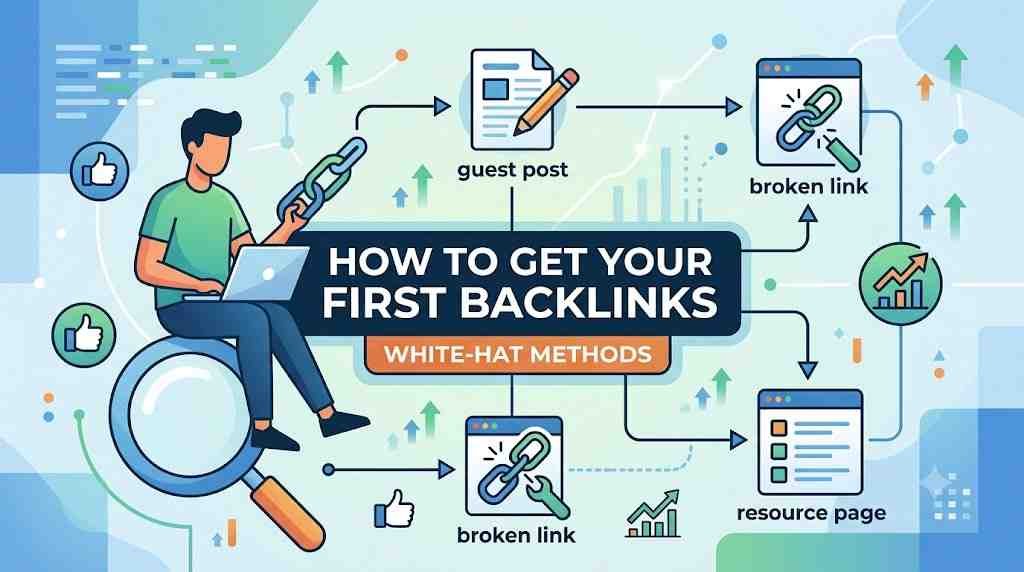
- Broken link building — find dead links on relevant sites (using a free checker) and suggest your content as a replacement; this has a genuinely helpful angle that improves reply rates.
- Resource page outreach — many niches have curated ‘resources’ pages; a short, specific pitch explaining why your content fits can result in a placement.
- Digital PR via unique data — if you’ve compiled original research or a survey, journalists and bloggers actively look for citable sources.
- Reply to HARO-style journalist requests (or current equivalent platforms) with a genuinely useful, specific quote — this earns links from established publications more easily than cold outreach.
Guest Posting Done Properly
Guest posting for pure link volume (especially on low-quality, pay-for-post sites) can actually hurt your site under Google’s link spam policies. Done properly — pitching genuinely useful, original content to reputable sites in your niche, with a natural, non-manipulative link back — it remains a legitimate and effective method, just slower and more selective than mass guest-post outreach services promise.
What to Avoid: Link Schemes That Can Hurt You
- Buying links in bulk from marketplaces — this directly violates Google’s link spam policies and risks a manual penalty.
- Reciprocal link exchange schemes at scale (‘link to me and I’ll link to you’) beyond occasional, genuinely relevant exchanges.
- Low-quality guest post networks that place your link on dozens of unrelated, low-authority sites simultaneously.
Frequently Asked Questions
How many backlinks does a new blog need to start ranking?
There’s no fixed number — quality and relevance matter far more than volume. A handful of relevant, editorially earned links often outperforms dozens of low-quality ones.
Is guest posting still effective in 2026?
Yes, when done selectively on reputable, relevant sites with genuinely useful content — mass guest-posting for link volume alone is the part that’s both ineffective and risky.
Can buying backlinks get my site penalized?
Yes — Google’s link spam policies explicitly cover paid links that pass ranking credit, and detection has become more sophisticated. It’s not worth the risk for a new site building long-term authority.
Building the content worth linking to first?
Our keyword research guide helps you find topics where a well-researched post can realistically outrank thin competitors.