
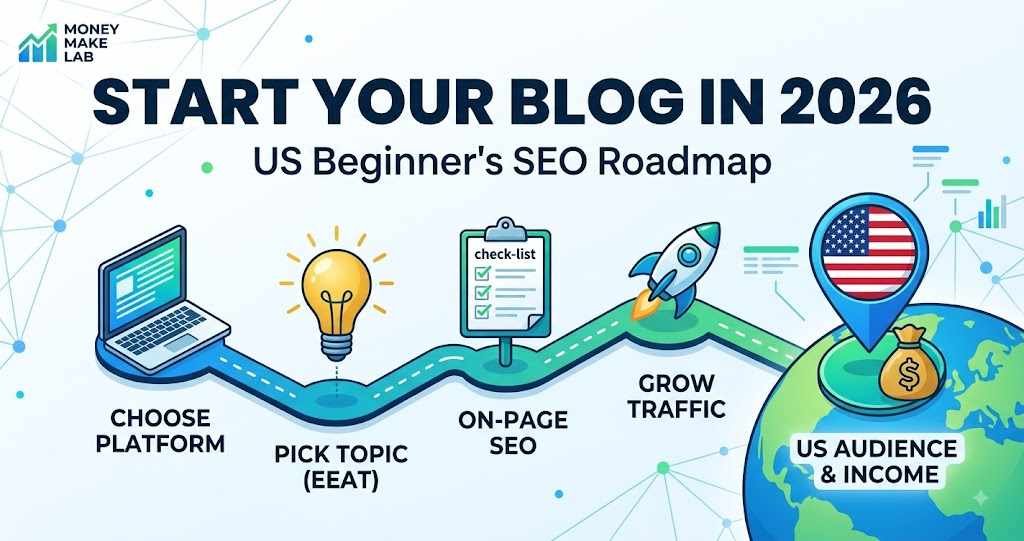
- Choosing the right platform and hosting
- Picking a topic Google (and readers) will reward
- On-page SEO basics that matter in 2026
- Technical SEO checklist for new blogs
- Content structure that satisfies EEAT
- Realistic growth timeline
Starting a blog in the US in 2026 is still one of the most durable ways to build an online income stream, but the rules for getting found on Google have tightened considerably. This guide focuses on what actually affects rankings today, not tactics that stopped working years ago.
Choosing the Right Platform and Hosting
Self-hosted WordPress remains the standard choice because it gives you full ownership of your content and the flexibility to install SEO plugins, unlike free platforms that limit customization and can suspend accounts. For US-based creators, hosting with US-region servers (or a strong CDN like Cloudflare) improves load times, which is itself a ranking factor.
Pair WordPress with a lightweight theme (Astra or GeneratePress) and a page builder like Elementor only where needed — heavy builders slow down mobile load speed, which matters more than design polish for SEO.
Picking a Topic Google (and Readers) Will Reward
- Look for topics with clear search demand but where existing top-ranking pages are thin, outdated, or poorly structured.
- Favor topics you can write about with genuine first-hand knowledge — this directly supports the ‘Experience’ pillar of Google’s EEAT framework.
- Avoid YMYL-adjacent claims (medical, financial, legal advice) unless you can back them with credentials or clearly cited sources.
On-Page SEO Basics That Matter in 2026
- One clear focus keyword per page, used naturally in the title, H1, first 100 words, and one subheading — not stuffed repeatedly.
- Descriptive meta title and description that matches search intent, not just keyword density.
- Logical heading structure (H1 → H2 → H3) so both readers and search engines can scan the page’s structure.
- Internal links to 2–3 related posts on your own site, which helps Google understand topical depth.
- Original images with descriptive alt text, compressed for fast loading.
Technical SEO Checklist for New Blogs
- Install an SSL certificate (https) — non-negotiable for both trust and rankings.
- Submit an XML sitemap via Google Search Console from day one.
- Set a clean, readable URL structure (e.g. /blog-post-title rather than long parameter strings).
- Confirm mobile responsiveness — the majority of search traffic is mobile-first.
- Check Core Web Vitals in Search Console monthly and fix flagged pages.
Content Structure That Satisfies EEAT
Google’s quality raters look for Experience, Expertise, Authoritativeness, and Trustworthiness. Practically, this means: an author bio with real credentials or background, a visible ‘last updated’ date, cited sources for factual claims, and clear disclosure whenever a post contains affiliate links or sponsored content. Thin, AI-generated content with no original insight is exactly what recent Google updates have targeted — every post should add something a reader couldn’t get from the top 3 existing results.
A Realistic Growth Timeline
Most new blogs see little organic traffic for the first 3–6 months while Google builds trust in the domain (sometimes called the ‘sandbox’ period informally). Consistent publishing (1–2 well-researched posts per week) combined with technical hygiene typically shows measurable traffic growth between months 4 and 9, not before.
Frequently Asked Questions
Is WordPress still the best choice for blogging in the US in 2026?
For most creators, yes — it remains the most flexible, well-supported, and SEO-friendly option, especially for anyone planning to monetize with ads or affiliate links.
How many blog posts do I need before applying for AdSense?
There’s no official minimum, but sites with fewer than 15–20 substantial, original posts and clear navigation/policy pages are commonly rejected. Depth and originality matter more than raw count.
Do I need to hire an SEO expert to start?
No — the fundamentals covered here (structure, technical hygiene, EEAT signals) cover the majority of what affects a new blog’s rankings. Paid SEO tools become more useful once you’re optimizing at scale.
Need a launch-ready blog structure?
We publish WordPress-ready templates and content calendars for new blogs — check the Digital Products section for our latest release.