The traditional blogging advice—”just write about your passion”—is the leading cause of abandoned websites. Passion without transactional search volume or commercial products to recommend simply leads to unpaid journaling.
A sustainable content site is built at the intersection of three factors: verifiable search demand, high monetization density, and competitive openings where independent publishers can still outrank corporate media.
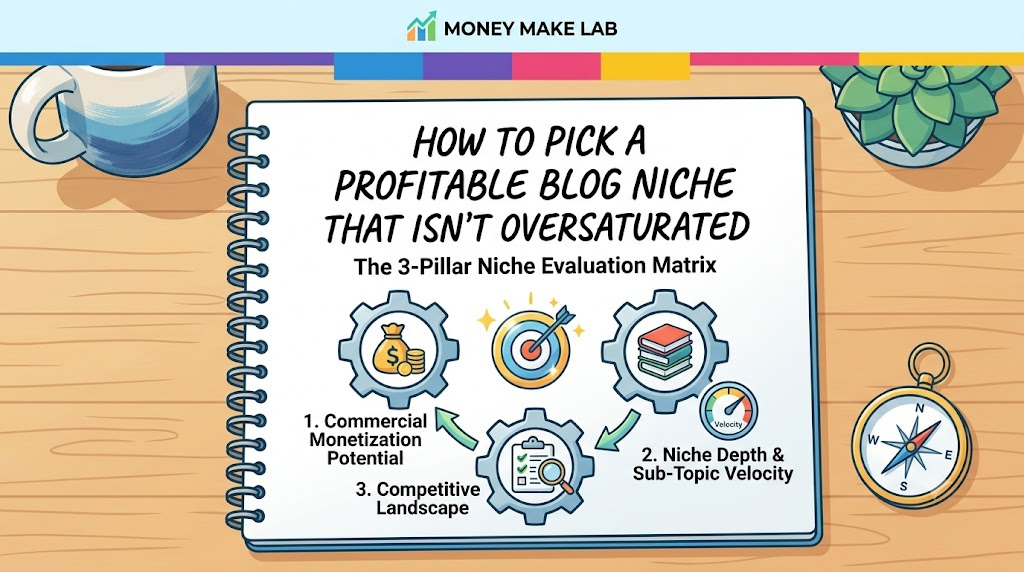
The 3-Pillar Niche Evaluation Matrix
1. Commercial Monetization Potential
Before launching, determine how the audience spends money. If a topic has millions of monthly searches but no products or services associated with it (e.g., “inspirational quotes”), monetizing via display ads alone requires enormous traffic to generate modest earnings.
- Are companies actively running Google PPC ads on key terms in this niche? (High ad competition indicates healthy underlying customer value).
- Do high-ticket or subscription software products exist in the ecosystem?
- Can you eventually launch your own specialized digital products?
2. Niche Depth & Sub-Topic Velocity
Can you realistically brainstorm 50 distinct article titles without repeating yourself? A niche must be focused enough to establish topical authority in Google’s eyes, yet deep enough to sustain long-term content expansion.
3. Competitive Landscape (SERP Analysis)
Examine Google search results for the primary keywords you hope to rank for. If page one is dominated entirely by Forbes, Wirecutter, and Reddit threads, ranking as a new domain will be slow and difficult. Look for search terms where individual niche blogs, smaller domain authority sites, or poorly formatted forum posts appear on page one—this signals opportunity.
Four Proven Niche Positioning Frameworks
- The “Specific Persona” Angle: Instead of “Personal Finance,” build “Tax and Budgeting Systems for Digital Nomads.”
- The “Specific Tool” Ecosystem: Focus deeply on a single growing software ecosystem, such as Notion setup guides, Figma workflows, or Shopify speed optimization.
- The “Specific Problem” Hub: Home organization for micro-apartments or gluten-free baking for athletes.
- The B2B Vertical: Exploring tech, tools, and workflows for specific small trade businesses (e.g., software stacks for independent electricians).