
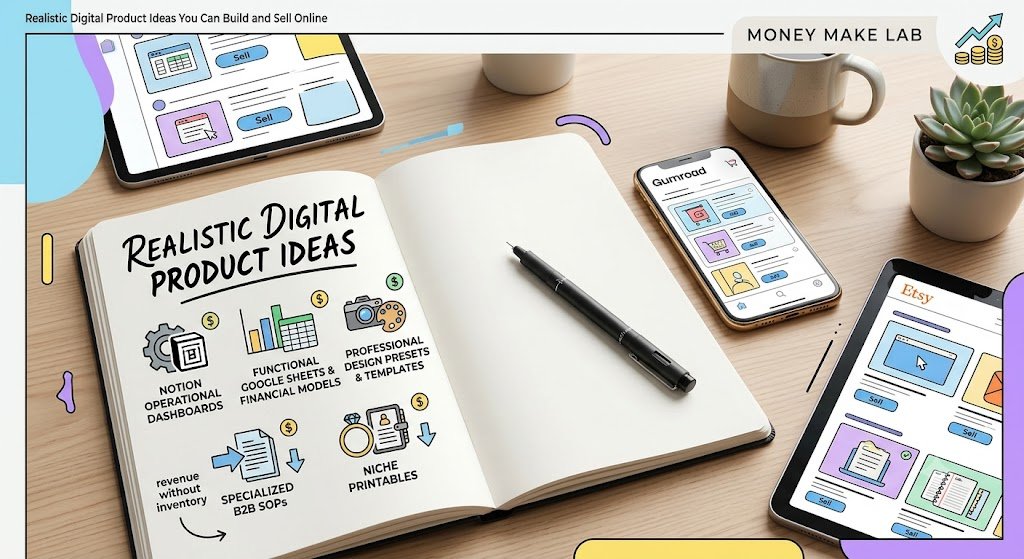
Selling digital products remains one of the most cost-effective business models because digital files carry zero inventory costs and virtually zero marginal reproduction cost. However, the notion that you can simply upload a PDF to Gumroad or Etsy and watch money roll in is a myth that leaves most beginners empty-handed.
A digital product only generates revenue when it saves someone time, eliminates operational confusion, or helps them make money. Below is an honest breakdown of five viable formats, their production difficulty, and where real buyers look for them.
1. Notion Systems & Operational Dashboards
Notion has evolved from a personal note-taking tool into the operational backbone for freelancers, agencies, and small startups. The market for standalone “habit trackers” is heavily saturated, but operational business hubs command premium prices ($29–$99).
- Viable Concepts: Client onboarding portals for agencies, content calendar workflows for YouTube channels, or freelance accounting and invoice tracking hubs.
- Tools Needed: A free Notion account to build the template and Gumroad or Lemon Squeezy to distribute the duplicate link.
2. Functional Google Sheets & Excel Financial Models
Spreadsheets with automated formulas solve high-friction problems for people who lack advanced data analysis skills. If you can build functional lookup tables, automated summaries, and conditional formatting, you have a marketable asset.
- Viable Concepts: Real estate rental property ROI calculators, small business inventory trackers, or personal zero-based budget models with debt payoff schedules.
- Distribution: Etsy (for personal finance spreadsheets) and Gumroad/direct sites (for B2B modeling tools).
3. Professional Design Presets & Templates
Small business owners frequently need professional marketing assets but cannot afford to retain a design agency. Providing plug-and-play creative templates bridges this gap.
- Viable Concepts: Canva social media branding packages for specific verticals (e.g., med spas, fitness coaches, realtors), Lightroom presets for commercial food photography, or email newsletter layout templates for ConvertKit/Klaviyo.
- Key Success Metric: Customizability and strict adherence to specific platform specifications.
4. Specialized B2B SOPs & Swipe Files
Standard Operating Procedures (SOPs) allow growing companies to train junior employees or contractors without spending hours writing documentation from scratch.
- Viable Concepts: Cold outreach email swipe files with verified response rates, customer support resolution scripts for Shopify stores, or step-by-step technical guides on configuring Google Tag Manager.
- Target Audience: Solopreneurs and small operations managers who need to delegate tasks quickly.
5. Niche Digital Printables & Workbooks
On marketplaces like Etsy, printable files—where the customer downloads a PDF and prints it at home—remain a stable category, provided the product targets high-intent life events or specific educational needs.
- Viable Concepts: Homeschooling curriculum worksheets, wedding planning logistical binders, or clinical clinical-rotation study guides for nursing students.
- Caution: Low barrier to entry means keyword research and clear thumbnail presentation are paramount to achieving organic search rank on Etsy.